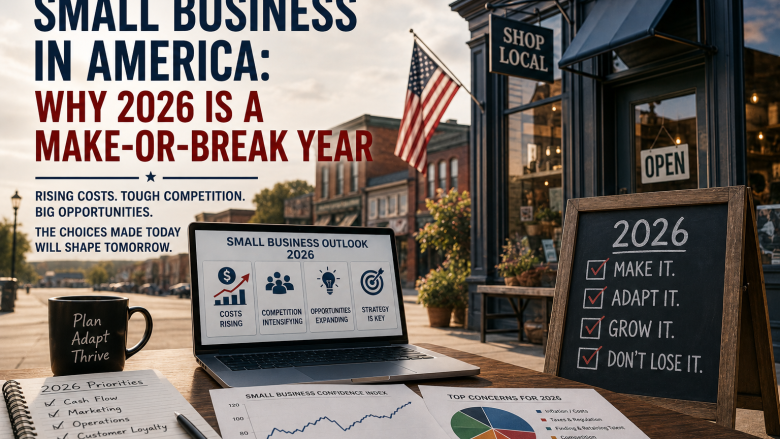
Small businesses — defined by the Small Business Administration as firms with fewer than 500 employees — represent 99.9% of all US businesses, employ 46.4% of the private-sector workforce, and generate approximately 43.5% of US GDP. They are, in the most literal sense, the backbone of the American economy. And as 2026 unfolds, they are under the most significant financial stress since the immediate aftermath of the pandemic, facing a convergence of pressures that the largest corporations can absorb but that many small operators cannot.
The Interest Rate Squeeze
The Federal Reserve’s rate hiking cycle from March 2022 through July 2023 pushed the federal funds rate to a range of 5.25-5.50%, where it remained for nearly 14 months before the first cut arrived in September 2024. For small businesses, this translated into a dramatic increase in the cost of credit.
The average rate on small business loans as tracked by the Federal Reserve’s Survey of Terms of Business Lending stood at 8.7% in Q1 2026, compared to 4.2% in early 2022. For businesses carrying variable-rate debt — common among small operators who rely on revolving credit lines — that increase represents an enormous cash flow burden. The National Federation of Independent Business (NFIB) monthly Small Business Economic Trends report found that 27% of small business owners cited the cost of financing as a significant problem in April 2026, the highest reading since 1981.
Small businesses also face a structural disadvantage in credit markets that worsened during the rate cycle. Large corporations were able to lock in fixed-rate debt at historic lows during 2020 and 2021, issuing investment-grade bonds at rates as low as 1-2%. Small businesses generally cannot access public debt markets, leaving them entirely dependent on bank lending, which repriced immediately as rates rose. The result is a two-tier financing environment where corporate America has largely insulated itself from rate increases while Main Street bears the full brunt.
The Labor Cost Challenge
Beyond financing costs, labor remains the single largest operating expense for most small businesses, and the market for labor has not loosened to a degree that relieves pressure. The minimum wage has increased in 25 states since 2020, with California now at $17 per hour for most workers and several cities implementing even higher local minimums. While these increases provide genuine benefits to low-wage workers, they represent an immediate cost challenge for small businesses in sectors like retail, food service, and childcare that operate on thin margins.
The NFIB’s April 2026 report found that 42% of small business owners reported raising compensation in the prior three months — a record high for this metric. But raising wages without corresponding productivity gains or price increases eats directly into profitability. The Kauffman Foundation’s analysis of SBA data found that net profit margins for the median small business fell from 8.3% in 2021 to 5.7% in 2025 — a decline that reflects the simultaneous pressure of rising wages, elevated input costs, and slowing top-line revenue growth.
Tariff Exposure and Supply Chain Costs
Small businesses are disproportionately exposed to tariff-driven input cost increases. Unlike large multinationals with dedicated procurement teams, global sourcing networks, and the negotiating power to diversify supply chains rapidly, small manufacturers and retailers often have a limited number of suppliers — many of them in China or other countries subject to elevated tariffs.
The US Chamber of Commerce’s 2026 small business survey found that 63% of small businesses that import goods or rely on imported inputs report that tariffs have meaningfully increased their costs since 2022, and that 71% of those businesses have been unable to fully pass those costs through to customers given competitive pressures. The survey found that the average small business in manufacturing spent $47,000 more on inputs in 2025 than in 2022 on a like-for-like basis, driven primarily by tariff costs and elevated shipping rates.
The Credit Access Problem
Access to credit has tightened significantly for small businesses in the current environment. The Federal Reserve’s Senior Loan Officer Opinion Survey shows that banks have been tightening standards for commercial and industrial loans for seven consecutive quarters, with small business lending conditions among the tightest reported since the 2008-2009 recession.
Community banks — historically the primary lenders to small businesses — face their own profitability pressures from elevated funding costs and unrealized losses on securities portfolios. The FDIC reported in its Q4 2025 banking industry report that community bank net interest margins had compressed by an average of 42 basis points since their 2023 peak, reducing the capacity and appetite for small business lending.
The SBA’s loan guarantee programs have seen surging demand as a result, with SBA 7(a) loan approvals reaching a record $32 billion in fiscal year 2025. But the SBA program has waiting lists, documentation requirements, and approval timelines that make it poorly suited for businesses with urgent capital needs.
The Formation and Failure Picture
Despite these headwinds, new business formation has remained surprisingly robust. The Census Bureau’s Business Formation Statistics show that applications for businesses likely to hire employees — the most meaningful measure of genuine entrepreneurial activity — reached 1.73 million in 2025, down slightly from the record 1.9 million in 2021 but well above the pre-pandemic average of around 1.4 million annually.
The flip side is that business failure rates are rising. The American Bankruptcy Institute reported that small business bankruptcy filings under Chapter 11’s Subchapter V (a streamlined small business bankruptcy process created in 2019) increased 34% in fiscal year 2025 compared to 2024. The sectors with the highest failure concentrations were retail trade, food service, and real estate — all industries facing the intersection of elevated operating costs and softening consumer demand.
The Digital Adaptation Divide
One of the most important and least discussed dimensions of small business health in 2026 is the growing divide between those that have successfully integrated digital tools — e-commerce, AI-powered inventory management, automated marketing — and those that haven’t. The McKinsey Global Institute’s 2026 small business digitalization report found that small businesses with high digital adoption grew revenue 23% faster between 2020 and 2025 than their less-digitized peers.
The adoption gap tends to follow income and education lines, with businesses in higher-income urban areas and those owned by college-educated entrepreneurs significantly more likely to have embraced digital tools. This creates a stratification within the small business sector that compounds existing inequality: well-positioned small businesses are thriving while those without digital capabilities face an increasingly uncompetitive position against both e-commerce platforms and digitally native competitors.
What Policymakers and Owners Can Do
The small business community has a clear wish list for policy support: lower interest rates, relief from tariff costs on imported inputs, expanded SBA lending capacity, and moderation of minimum wage increase velocity. Whether those wishes are fulfilled in 2026 depends on Federal Reserve decisions, trade policy choices, and legislative priorities that small business owners largely cannot control.
What they can control is the quality of their own operations — and the data suggests that the small businesses most likely to navigate 2026 successfully are those that have invested in digital capabilities, diversified their customer and supplier bases, maintained lean cost structures, and built sufficient cash reserves to weather unexpected costs. In the current environment, the margin for operational error is thin — and the businesses that thrive will be those treating efficiency and adaptability as survival imperatives rather than optional improvements.
Sources: Small Business Administration, National Federation of Independent Business, Federal Reserve, Kauffman Foundation, US Chamber of Commerce, FDIC, Census Bureau, American Bankruptcy Institute, McKinsey Global Institute