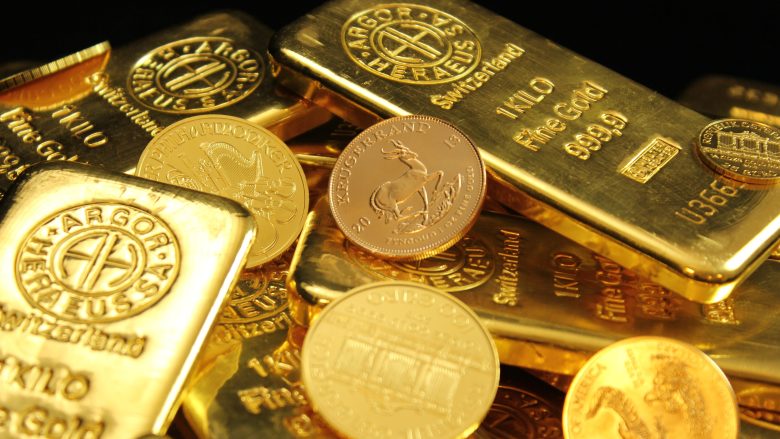
Gold hit $3,287 per ounce in April 2026 — a record high at the time — before moderating to approximately $3,150 in May as some of the geopolitical risk premium unwound. The metal’s remarkable performance over the past 18 months, a rally of approximately 40% from its mid-2024 lows, has forced investors who had written off gold as a relic of a pre-digital monetary era to reconsider their dismissal. Understanding what is driving gold’s strength, and whether the fundamental case holds at current prices, requires looking at a convergence of factors that is genuinely unusual in gold market history.
Central Bank Buying: The Structural Pillar
The most important driver of gold’s structural strength over the past three years is a shift in central bank behavior that represents a fundamental change in how sovereign wealth managers are thinking about reserve composition. The World Gold Council’s 2025 Central Bank Gold Survey found that central banks globally purchased a net 1,045 tonnes of gold in 2024 — the third consecutive year of purchases exceeding 1,000 tonnes and far above the historical average of approximately 400-500 tonnes annually.
The buyers are primarily emerging market central banks: China, India, Turkey, Poland, Singapore, and others that have explicitly or implicitly expressed a desire to reduce their reliance on US dollar-denominated assets. China’s People’s Bank has been a consistent purchaser, increasing its official gold reserves from approximately 1,948 tonnes in 2022 to over 2,400 tonnes as of early 2026. Russia — whose dollar reserves were frozen following the 2022 invasion of Ukraine — has been a dramatic case study in the risk of reserve concentration, and that object lesson has not been lost on other governments that might someday find themselves in adversarial relationships with the US.
The geopolitical reserve diversification story is not simply about anti-dollar sentiment — it is about risk management. Holding dollar reserves requires holding assets — primarily US Treasuries — in the US financial system, where they can potentially be frozen or confiscated. Gold held in domestic vaults cannot be frozen by a foreign government. For sovereign wealth managers in an era of geopolitical fragmentation, gold’s physical and jurisdictional characteristics have taken on new relevance.
The Inflation Hedge Debate, Revisited
Gold’s traditional reputation as an inflation hedge had a poor performance decade during the low-inflation 2010s, when the metal traded sideways for years even as equity markets soared. Gold skeptics used this period to argue that the metal’s inflation-hedging narrative was a myth. But the inflation surge of 2021-2023 partially rehabilitated the case: gold did appreciate meaningfully during that period, even if its performance was not as dramatic as commodity indices or inflation-linked bonds.
The current elevated-but-declining inflation environment presents a more nuanced picture. Gold tends to perform best not when inflation is high, but when real interest rates — the nominal interest rate minus expected inflation — are low or negative. As the Federal Reserve has held rates elevated while inflation has gradually declined, real rates have risen, creating an environment that is theoretically less favorable for gold. Yet gold has continued to appreciate, suggesting that other factors — central bank buying, geopolitical risk, and perhaps early anticipation of Fed rate cuts — are more powerful drivers in the current cycle.
The Geopolitical Risk Premium
Gold’s spike to $3,287 in April 2026 was directly triggered by the escalation of Middle Eastern conflict and the disruption to oil markets. Gold and oil frequently move together during geopolitical crises, as both reflect the same underlying fear trade. With Brent crude rising more than 50% from January 2026 levels and military conflict broadening across the region, investors rushed to gold as the prototypical safe haven asset.
The unwinding of this geopolitical premium — if and when Middle Eastern tensions de-escalate — represents the primary near-term downside risk for gold. Analysts at Citigroup estimated in a May 2026 note that approximately $200-250 per ounce of gold’s current price reflects geopolitical risk premium above its fundamental valuation based on real interest rates, central bank demand, and technical momentum. If that risk premium were to unwind rapidly, a correction to the $2,900-$3,000 range would be technically justified.
Silver’s Relative Value Story
Gold’s rally has drawn attention to silver as a potentially more attractive entry point within precious metals. The gold-to-silver ratio — which measures how many ounces of silver are required to purchase one ounce of gold — stood at approximately 87:1 in May 2026. Historically, the ratio has averaged approximately 60:1, and during peak precious metals bull markets, it has fallen as low as 30:1 as silver’s smaller market and higher industrial use component amplifies gold’s moves.
Silver’s industrial demand profile — approximately 55% of silver demand is from industrial applications including solar panels, electronics, and medical devices — gives it a growth tailwind from clean energy investment that gold lacks. The Silver Institute’s 2026 World Silver Survey projected a fourth consecutive year of supply deficit, with industrial demand absorbing essentially all new mine production plus a portion of existing inventories.
Gold Miners: The Leveraged Play
Gold mining equities have significantly underperformed the gold price itself over the past decade, frustrating investors who expected mining stocks to provide leveraged upside to gold price appreciation. The underperformance reflects the mining industry’s history of capital misallocation, project cost overruns, and operational challenges that have destroyed shareholder value even in periods of rising gold prices.
But the situation in 2026 is arguably the most favorable for gold miners in at least a decade. With gold at $3,150 and the all-in sustaining cost of production for major miners averaging approximately $1,350-$1,450 per ounce, operating margins are extraordinary. The Gold Miners ETF (GDX) has rallied approximately 65% from its 2024 lows, and several large miners — Newmont, Barrick, Agnico Eagle — are generating free cash flow at rates that support meaningful dividend increases and share buybacks.
The Digital Gold Alternative
Any discussion of gold in 2026 must acknowledge Bitcoin’s coexistence as a claimed “digital gold” alternative. Bitcoin has not displaced gold’s function in institutional portfolios, but it has attracted a significant share of speculative and inflation-hedge demand from younger investors who view the digital asset as superior to the physical metal. The correlation between gold and Bitcoin has been inconsistent — the two assets sometimes move together during risk-off episodes and sometimes diverge dramatically — suggesting that they are serving partially overlapping but not identical functions.
For institutional investors with mandates that include gold as a reserve asset, Bitcoin remains an unsuitable substitute due to its volatility, regulatory uncertainty, and lack of the millennia-long track record of store of value that gives gold its unique standing. For individual investors, the choice between physical gold, gold ETFs, gold miners, silver, and Bitcoin involves meaningfully different risk profiles, liquidity characteristics, and fundamental drivers that warrant careful consideration of investment objectives.
The Bottom Line
Gold’s fundamental case in 2026 rests on three pillars: persistent central bank buying that creates structural demand support, real interest rates that remain below historical averages despite Fed policy, and a geopolitical environment that shows no near-term sign of returning to the relative stability that characterized the 2010s. At $3,150, gold is not cheap by any historical metric — but neither is it obviously in bubble territory when evaluated against the structural drivers that have brought it to this level. For investors seeking portfolio diversification and geopolitical risk hedging, a modest allocation to gold continues to offer attributes that few other assets can replicate.
Sources: World Gold Council, Silver Institute, IMF, Citigroup research, Newmont and Barrick financial reports, CME Group gold futures data, Federal Reserve real interest rate data